Eric Oliver
  • HOME
  • O'BRIEN

Learning to take criticism

3/30/2014

0 Comments

 
I'm not quite sure if it is my generation or basic human need, but I have trouble dealing with criticism. 

Last week we presented our graphics to the Daria's class in an attempt to get some feedback. Mine could've gone better. It worked, but it combined my fear of public speaking with my fear of presenting things I've made. It was sort of like the perfect storm.

I took the criticisms they had and worked it into my project. I'm currently busy adding a new element to my graphic as well. The critiques that Daria's class gave were right on par, and overall they helped me grow as a graphic artist - something I don't consider myself to be.

This info graphic has started to challenge me. I thought I was the best, and I thought my graphic was very good - but that's not the case as I'm starting to realize.

The worst part is trying to find a way to do everything when you have a lot to do.

I'm not going to say I'm not looking forward to this week because that isn't true. I just think I'm a little overbooked. 
0 Comments

The deadline looms

3/23/2014

0 Comments

 
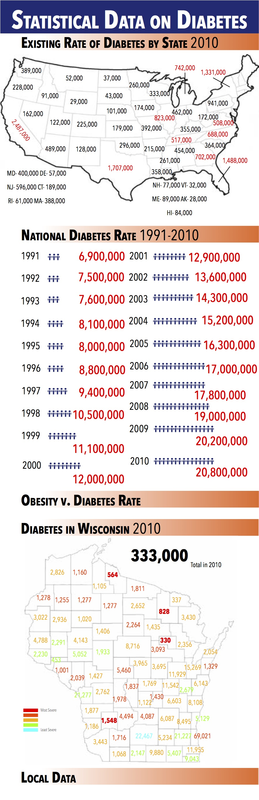
All semester I have been working on deadline to create an info graphic on various statistics for diabetes. Tomorrow it's all due. 

It has been a semester filled with its ups and downs. From successfully finding some county wide data on the diabetes rate in Wisconsin to struggling to find anything relating to a local perspective, this project has taken up a majority of my time and inbox. I'm ready to put it behind me and move on to the next half of the semester.

The O'Brien Fellowship has been an interesting experiment. The time I've spent with Lily Thomas has been nothing but grade a. She treats us like equals and she has an interest in what is happening with our lives. I'll be sad to see it end.

Before it does though, I'm going to put all my effort into the projects we are assigned for the rest of the semester. You only get back what you put in, and I want to ensure I get the most that I can.

As for the deadline, I feel very confident that the info graphic I have will be exactly what is needed.  
0 Comments

Getting graphic

2/23/2014

0 Comments

 
Picture
This week was challenging because I had to come up with a way to creatively display all the data I had gathered on diabetes.

The Center for Disease Control has data up to 2010 when it concerns diabetes, and I had spent the previous few weeks mining to get it.

I'm at an impasse with the local data, and I'm waiting on a consult when it comes to how I'll display the obesity v. diabetes graphic, but overall I feel like I have learned a lot and really put my graphic design abilities on display.

Next week I'm going to put the finish touches on this graphic deal with any of the edits I have to make, and continue searching for local data.

It's frustrating that all this searching isn't paying off. I'd like nothing more but to have the data so I can go ahead and progress with the assignment, but everywhere I look just takes me somewhere else. 

Who knows if I'll actually find it, but I'm going to keep trying up until the end.

Until next week. 
0 Comments

A graphic proposal

2/16/2014

0 Comments

 
What do you do when you realize that the data you need isn't out there?

I've resided myself in the fact that the data I need isn't out there and that raises a bunch of other questions. Why isn't it there? Is anyone doing anything for studying the data? Will there be a time where the data will exist?

I can't understand why local data is so hard to find, but that won't stop me from progressing with the project. 

I've come up with five potential data graphics. 1. Will focus on the rate of diabetes nationally along with hot spots. 2. Will focus on the prevalence of diabetes throughout Wisconsin. 3. Will be a comparison between diabetes and obesity. 4. WIll possibly be a combination of diabetes and the poverty level and 5. Will track diabetes through out the years.

The proposed info graphics are going to be a challenge to me because I have limited experience working on the graphics. I can use InDesign proficiently and I'm looking forward to testing my InDesign capabilities.

This semester has brought about a series of challenges and with each one it looks like it the final goal gets pushed further and further away, but I feel confident that once I start working on the project itself everting will fall into place. 
0 Comments

Continuing to mine 

2/10/2014

0 Comments

 
Picture
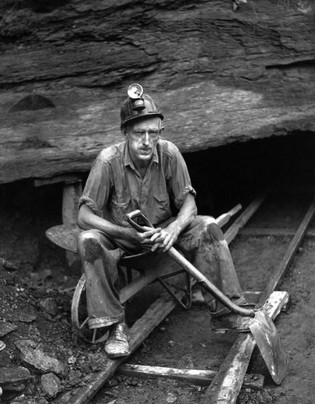
So I know what it feels like to be a miner...

This search to find the local data has proved to be more difficult than I imagined. Various contacts have sent me back to the City of Milwaukee Health Department, each time sending me home empty handed. 

Someone has to have this data the challenge is finding out who that is. 

I'm all but set to meet with members of the Neighborhood News Service to seek approval for my initial ideas. I believe that what I have set up will be perfect for what Andrea Waxman, the journalist, is seeking. 

I think that if I can get approval for these ideas I can finally start my project. 

Unfortunately everywhere I look it seems like I am coming up short on the local data. I've tried sources at various hospitals throughout Wisconsin. I've tried nonprofits. I've even tried large national corporations, but no one seems to have this data.

What is even weirder is the fact that there isn't anyone that knows who I can talk to. How is this data not easily available? Shouldn't it be out there? 

0 Comments

Data mining over diabetes

2/3/2014

0 Comments

 
Week two of the O'Brien Fellowship brought me more challenges than I ever thought could happen. 

I have been assigned to make a series of data graphics on the prevalence of diabetes throughout the city, state and nation. Throughout this week I've mostly been doing the less than glamorous task of data mining.

The Center for Disease Control has had some phenomenal data tables, and I see myself using them frequently to determine the national and state wide prevalence. Unfortunately there data only goes up to 2010 and there is nothing in the terms of the rate of city wide diabetes. 

The American Diabetes Association unfortunately didn't have any data that I considered pertinent to the project. However, it could be very helpful to my colleagues. 

Data mining is just as tedious as it sounds, but I'm hopeful that this week I'll find more information concerning the local rate of diabetes.

If anyone has any leads, feel free to connect with me over social media concerning them or email at eric.oliver(at)mu.edu. 
0 Comments

Imagining the future of the O'Brien Fellowship

1/20/2014

0 Comments

 
Picture
If you would have told me a year ago that I would be deeply involved in a in-depth look at healthcare I would have laughed at you.

A year later and I am getting ready to embark on my second semester with the O'Brien Fellowship in Public Service Journalism. This semester already looks very different. Lillian Thomas of the Pittsburgh Post Gazette has undertaken a large overarching project on the American healthcare system. She has me, Sarah Hauer and Eva Sotomayer this semester to accompany her. 

We are going to be taking a long hard look at diabetes in America and Milwaukee in a partnership with Andrea Waxman and the Milwaukee Neighborhood News Service, a independent news organization focusing on central Milwaukee social issues. We all have different roles to play. My role, this semester, is going to be focusing on a comprehensive info graphic that is overloaded with stats about type 2 diabetes and its prevalence in our society. 

It will lay out the basics of the disease and then track its expansion nationally and locally. 

I do not have much experience with the disease and I just started researching it. I know it is caused through a variety of problems and that the exploding obesity problem that plagues society is a large contributor to it. Because of the increasing obesity problem coupled with a lack of physical activity American's are developing type 2 diabetes at an alarming rate. 

I am looking forward to this semester working with NNS and Lillian to follow a patient as he takes on the healthcare system head on and learning more about this disease that is too commonplace in our society. 

As the fellowship comes close so does my career at Marquette. I left my mark on this University and I am hoping this fellowship will leave a mark on me. 

0 Comments

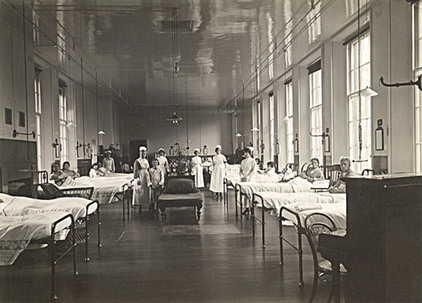
The postwar hospital transitions to the future 

11/24/2013

0 Comments

 
Picture
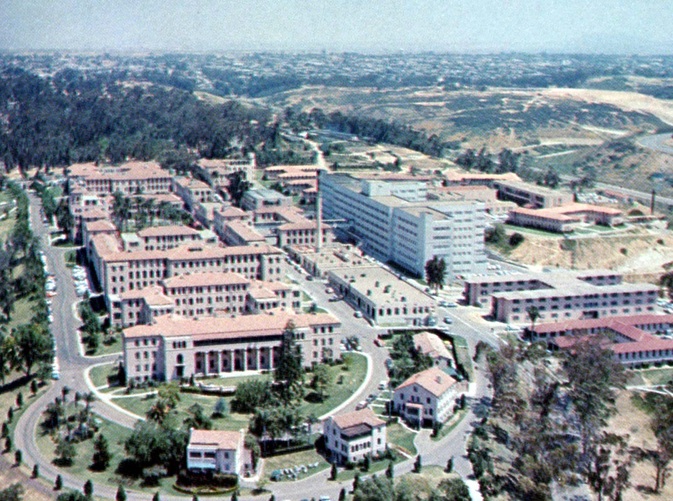
The hospitals of the 1950s were characterized by how they responded to World War Two.  

The postwar hospital relied on three things: the belief in science as liberation, a rational solution to the problems of existence and the importance of fostering a sense of belonging with an emphasis on human resources. 

Unfortunately an increased cost sectionalized elderly and the poor. In turn this made the reliance on national government one of great importance. Masses swarmed towards Medicare and Medicaid. The 1950s is basically a transitional period. 

The giant hospitals of the past were being replaced by small community based hospitals. The average local hospital had less than 100 beds. However even though the size of the hospital was shrinking, the short term focus was still stressed. That said an increased amount of hospitals also had benefits around the community.

They were major local employers. In 1960 these local short-term hospitals employed over one million people. As their role in society increased hospital policy focused on construction as more were created they stressed their focus to addressing the problems in society. 

The community hospital upheld the values of social stability, community building and charity. Their idea of charity was strictly related to a "paternalistic version of social welfare." It was a gift from those that could afford it to those who could not. There was nothing dictating these rights. 

As the split between community and teaching institutions became deeper, the face of a hospital became an issue of importance. It was no longer acceptable for a hospital to just serve a community. They had to provide service with a smile. We wanted our medicine to have a personality.

The public wanted access to technology and they all wanted to have this service. Unfortunately it wasn't possible to achieve both of these goals. The policy of community conflicted with social expectations of what the hospitals actually were. An expansion of technology came to mark the 1950s, and it started to change the hospital once again.  

0 Comments

World War II changed the voluntary hospital

11/17/2013

0 Comments

 
Picture
When World War II happened, the voluntary hospital cemented it's place in the American economy as a public sector.

Stevens claimed in chapter 8 that a combination of three policies allowed for the voluntary hospitals to become a sector: decentralist, pro industrial and public-private collaborative. 

When the war started penicillin was produced in record numbers. The massive amount of penicillin produced was an example of the success that national medical research had finally achieved. Stevens claims that it wasn't the only success however. Research took over medicine because of an increased amount of PhDs. Research had once again taken the front door of the American hospital. They emphasized research in three ways: as a symbol of success for scientific medicine, as potential knowledge centers for hospitals and hospital organizations to arrange around and finally as an institution where clientele was changing because of the new research. 

The renewed focus on research revitalized discussions concerning the regionalizing of medical care. Medical schools had an extensive ability to adopt the newest and best technologies. Unfortunately, the nation was struggling to spread that level of adaptation from the largest hospital to the smallest and eventually to primary care providers. What followed was what is now known as a distribution network. The adaptation of medical knowledge among the masses allowed for a revitalized focus on research and made the highly advanced medical colleges even more successful. 

As for the voluntary hospital, it once again took on a new form because of the war. Various programs that were created during the war found their peak through the voluntary hospital. The first was the Lanham Act. The act provided an immediate increase in infrastructure in the US, this included the development of new hospitals and care centers. 

The second program was a direct benefit to young servicemen and their wives. A majority of them were without insurance. Thus the government launched the federal emergency maternity and infant-care program. These programs allowed the American Hospital Association to cement its place as the leading representative of voluntary care. 

"Voluntarism claimed the partnership and trust of the government. It supported freedom, the selfless service or religious organizations and 'the finest attitudes in our society.' These 'attitudes' assumed cooperation between major producers and government, with hospital associations influencing and creating government policy." Because of their increased role in the government you can still see lobbyist representation in action.

0 Comments

Hospital adaptation of technology and insurance

11/10/2013

0 Comments

 
Picture
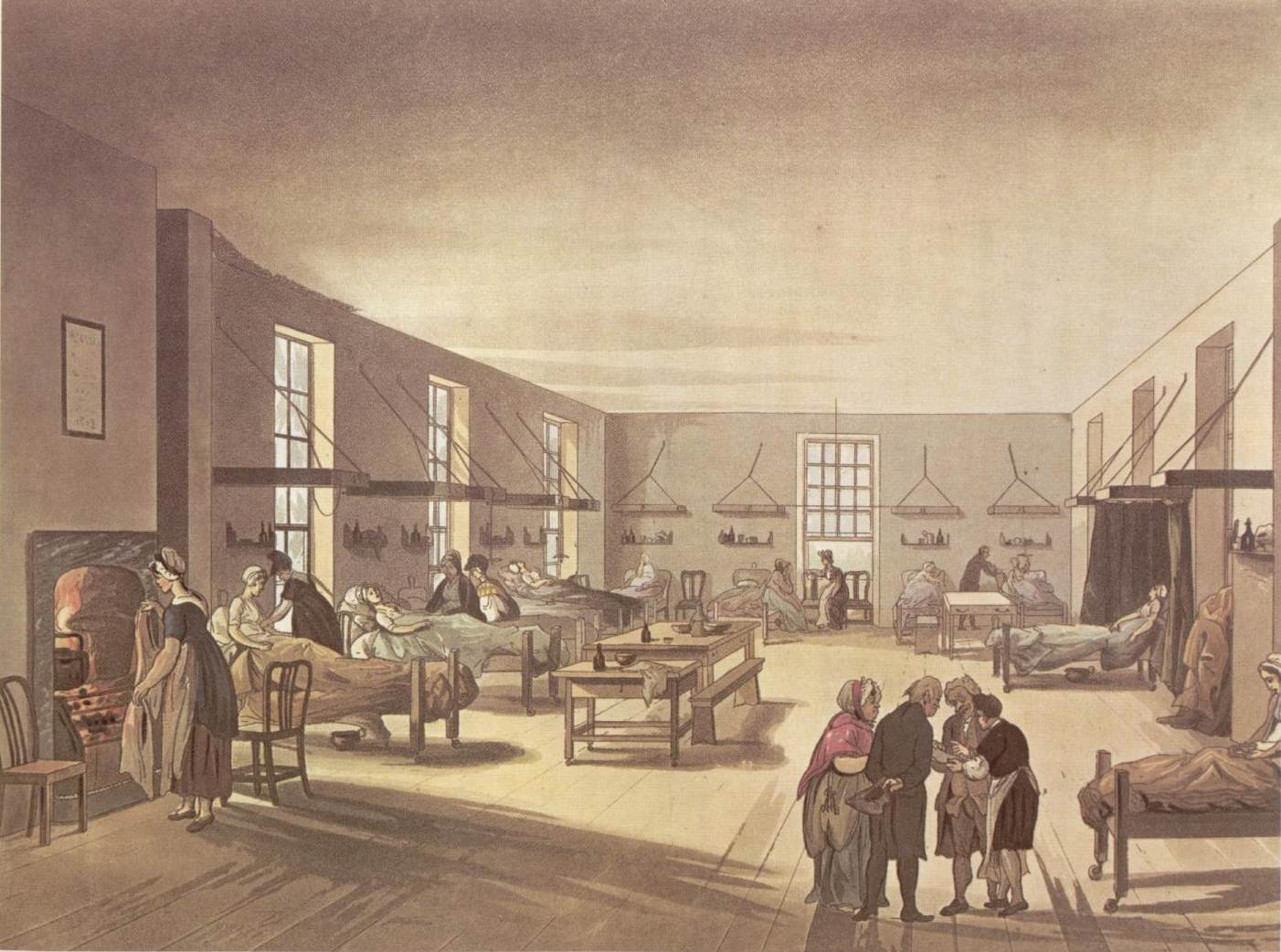
After the depression a new problem plagued hospitals. Access to technology was great and diverse. Because private and public institutions still existed, the availability of technology mirrored that. 

There were many suggested routes for the distribution of technology unsurprisingly the approach that was adopted was called the private, "voluntary approach. It abandoned existing networks of hospitals and practitioners, instead it allowed technological adaptation to be arranged through a private prepayment method which primarily targeted the middle class. 

The hospitals of the mid 20th century were a plethora of diseases. Practitioners began hospitalizing a wide variety of cases. By the end of the 40s, one seven out of every one hundred patients were admitted. 

So with this increased patient presence the importance of technology was at an all time high. Hospitals were dealt a problem. How do they give the low class workers dealing with debt issues the same level of care that the rich private patients paid to feel entitled to? 

First they tried to rely on insurance, although that should have provided a mean to remove the financial barriers confronting all patients. There was a large problem concerning poverty. The economically deprived individuals were unfortunately unable to pay for insurance and their inability prevented the large scale implication of the health insurance for technology scheme. 

This wasn't a problem for the large booming hospitals of the 30s. Where the smaller institutions had to find ways to adapt to the technological problem the large hospitals were booming technological meccas. They adopted new therapies and provided cutting edge instruction. 


But with all meccas their downfall came with the increased presence of laboratory techs. As the administrative side of the hospital started to out number the practicing side, labor organizations had to be reviewed once again. This caused a shift in revenue, and these large meccas had to find a new way to adapt to the future.


Enter the Blue Cross. Health Insurance took over, and the American hospital system was united under insurance. 

0 Comments
<<Previous

    What is this?

    This blog will is a means to track my progress with the O'Brien Fellowship as we look at access of health care throughout regional cities in the United States. It will have weekly blog posts about the history of the American medical system.

    Archives

    February 2014
    January 2014
    November 2013
    October 2013
    September 2013

    Categories

    All

    RSS Feed


Powered by Create your own unique website with customizable templates.